Written by:
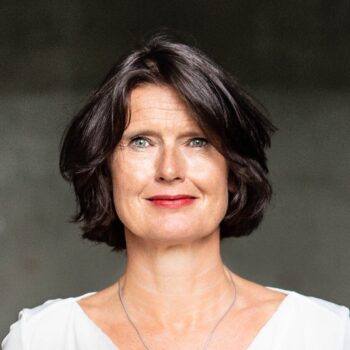
Alexandra Borchardt
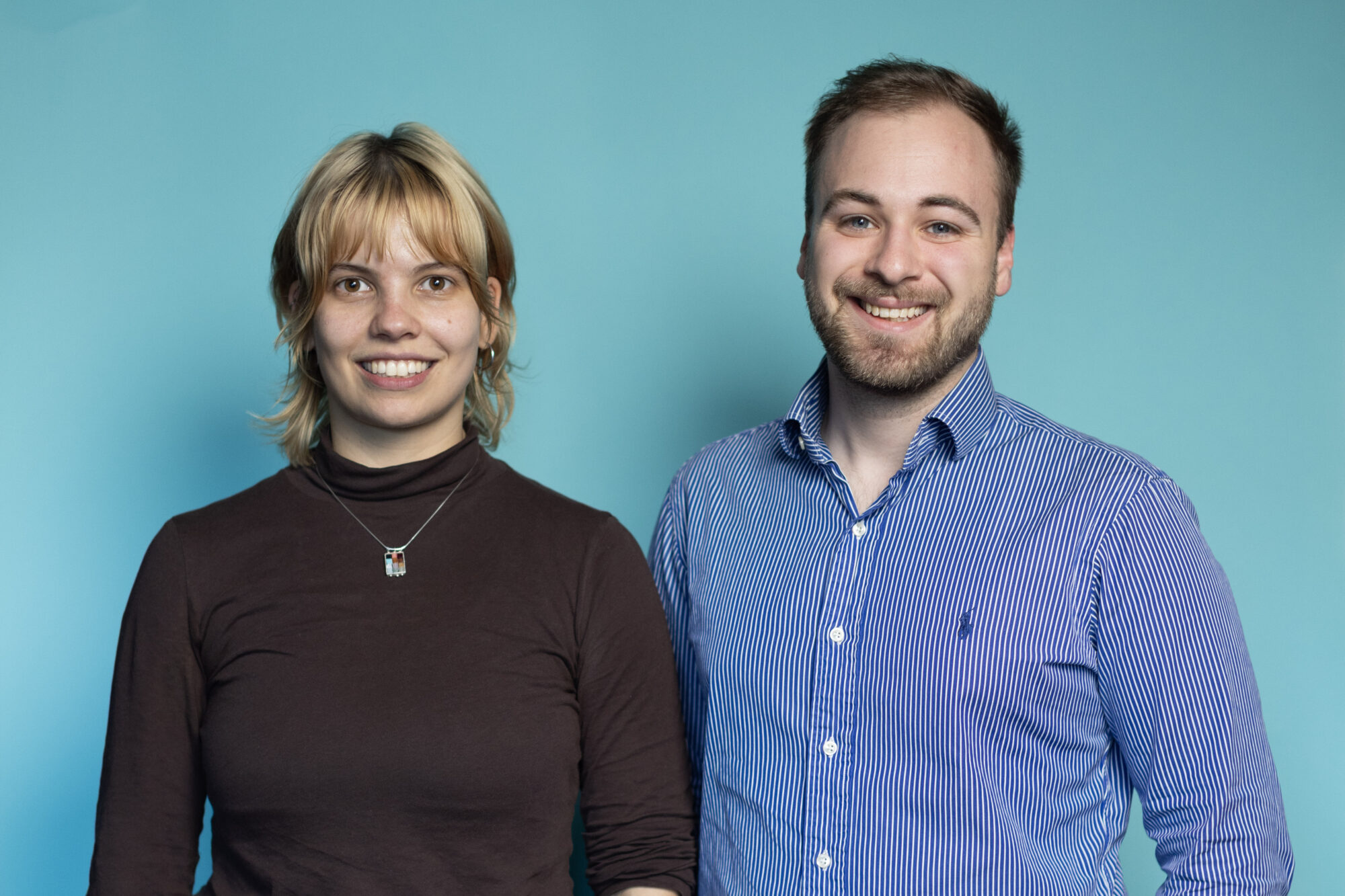
Andererseits does journalism with and for people with disabilities. In the video, Clara Porak and Lukas Burnar explain what matters most to them. The case story shows which decisions enable growth – offering concrete lessons on subscription strategies, product development, organizational models, and data-driven work.
“Our story is a story of focus.”
The founding story
Clara Porak, just 21 years old and working as a freelance magazine journalist, is already frustrated with the industry. She studied educational sciences and writes primarily about people whose freedom of movement is restricted due to disabilities. This is a topic she knows well: her brother has Down syndrome. Newsrooms were happy to buy such stories, she says, but she soon grew tired of writing about people with disabilities. She felt a change in perspective was needed – those affected should have a voice of their own.
In March 2020, she posted a tweet that would prove decisive: “I would like to try journalism with people with disabilities.” The response from other journalists with similar experiences was strong. In the middle of the pandemic, a group of committed media makers came together and decided to build a media outlet. After a period of trial and error, people with disabilities in particular made it clear that they wanted to be paid for their work. This was a clear commitment to becoming a professional media company. Clara Porak and Lukas Burnar went on to found Medienhaus andererseits, where they are still managing directors today. The search for sustainable sources of income began.
What problem does Andererseits want to solve – and for whom?
Andererseits addresses three core needs. First, its research and products create a space in which people with disabilities feel seen and heard – something that rarely happens in traditional reporting, where they appear as protagonists only when reduced to their limitations. Second, it responds to a need for accessible information. Many traditional media products are not usable for people with disabilities, Porak explains. Third, Andererseits brings a new, authentic perspective to the media landscape.
As a result, several target groups are addressed: people with disabilities, their relatives, and those who work with people facing everyday restrictions. In addition, politically engaged users – as well as people who are currently learning German – use Andererseits’s products and benefit from the use of simple language.
What the founders did: development in phases
Phase 1: Founding In 2020, eight colleagues with and without disabilities joined forces. There was neither structure nor strategy – it was the pandemic, a time for experimentation. The team started with a website, a Twitter account, and an Instagram channel. It soon grew to 15-20 people working on a voluntary basis.
Phase 2: First growth spurt In 2022, the team decided at a retreat that they wanted to professionalize. The newly founded company received its first funding, and a crowdfunding campaign raised €40,000, triggering steady growth. One of several films, the investigation Das Spendenproblem (“The Donation Problem”) about an Austrian charity gala, brought wider public attention and won multiple journalism awards. At the same time, Porak continued her education as an entrepreneur. As a fellow in the Journalism Innovators Program at the Hamburg Media School, she learned how to build a business – and immediately put that knowledge into practice, delivering the strongest pitch among 15 fellows.
Phase 3: Diversify and experiment In 2024, Andererseits launched a print magazine – despite expert advice that print had no future. For the team, this step proved crucial for building loyalty, Porak says, and the magazine is now a core subscription product. To generate revenue, the team tested various approaches: print advertising, workshops on inclusion and accessibility, and collaborations with social institutions and schools. Most of these remained side businesses. Digital advertising in the newsletter works well, but there is only one advertising slot per week.
Phase 4: Expand, focus, professionalize Thanks to support from the Media Forward Fund, Andererseits was able to expand again in 2025. Roughly half of the budget comes from the fund, the other half from subscription revenue. The organization now has 3,000 paying subscribers who receive all digital products and the print magazine. The team is growing from five to twelve employees – 7.5 full-time equivalents. In 2026, Andererseits plans to focus even more strongly on subscriptions, with a clear goal: reaching 7,000 subscribers in order to secure jobs. This ambition is communicated openly on the website. “We always come back to subscriptions; they are our foundation,” says Porak. Everything else is additional business. The organization itself is also being further professionalized, with clearly defined roles for all employees.
How the organization is structured – and how decisions are made
Andererseits is currently organized as an association in which every employee is a member. The association owns the non-profit Medienhaus andererseits gFlexCo. Everyone who has been with the organization for more than a year becomes a member and has one vote. Major decisions are put to a vote – even the two managing directors must justify their choices.
Within management, Burnar focuses primarily on organizational development, while Porak is responsible for product development. Of the twelve employees, who all work different hours, seven are in the editorial team, while the others keep the business running. One person handles marketing and communications, another subscription strategy. “We don’t expect concrete output from her every week,” Porak explains. Others take on administrative roles. Each editorial format has a designated lead. Inclusivity is also a guiding principle internally.
How Andererseits develops products
Product development focuses on “habit-forming formats.” Many formats have been tested and discontinued, including a podcast and a newsletter column. Each format has defined KPIs. A key advantage is that Porak herself oversees format development. “It’s easier for me to kill my own ideas than someone else’s,” she says.
She regularly speaks with users to understand what works. If a product fails to gain traction, it is discontinued. “If I talk to magazine subscribers and six of them don’t know we have a newsletter, then it’s probably not good enough.” During testing phases, product teams are kept small. If a format works, it is handed over to the editorial team and retained – provided the cost-benefit ratio makes sense. The podcast, for example, was expensive to produce, and the path from podcast to subscription proved too long for most users.
Journalistic principles
Clear principles define how journalism works at Andererseits – what quality means and how stories are told. At the core are strong research, accessibility, and a clear narrative built around the “other” perspective.
“Compared to traditional media, our texts are very different – the tone, the narrative mood, the language is much simpler,” says Porak. This difference was precisely what motivated the founding of Andererseits, as such approaches were often rejected by editors-in-chief with more traditional ideas of quality.
What many editorial teams struggle with – thinking consistently from the audience’s perspective – is central here. No one is solely responsible for personal development, but the team’s skills must also anticipate future needs, such as the growing importance of video. “We all need to be able to do video so that we remain adaptable.”
How Andererseits measures success
Measuring success to drive targeted growth is central to Andererseits. The team follows a clear data strategy across the entire funnel – from reach and user acquisition to conversion and retention. Quantitative data is complemented by in-depth user surveys. Each format has target metrics, and marketing efforts are aligned accordingly.
Growth and conversion rates are particularly important. As a result of this data-driven approach, Instagram reach grew by 55 percent to 42,000 followers in 2025. The free newsletter reached 21,000 readers – twice as many as the year before – and subscriptions increased by 50 percent.
Lessons learned from successes and mistakes
According to Clara Porak:
- Focus is crucial. It’s better to do less and do it well. “Our story is one of focus – we’ve discontinued many formats.”
- The team is key. You need people you trust and who are willing to take responsibility.
- Decision-making structures matter. “If we had always done what I wanted, it wouldn’t have worked.” Shared decision-making is part of the success – some of the best ideas come from those who are often not heard.
- When working with external partners, it’s important to know who truly supports you – and who doesn’t. You shouldn’t work with the latter, even if it’s lucrative.
- The industry is white and male-dominated, but migrants, marginalized people, and (young) women should dare to start businesses. “People overestimate how difficult it is to run a company.”
- Continuous learning matters. “We simply apply what we’re taught in courses.”
- You have to dare to ask for favors – having a clear mission makes that easier.
What she would do differently next time
Porak says she would grow more slowly and reduce pressure. “We’re growing very aggressively and creating jobs, and we have to cover those costs through higher revenues.” Next time, she would prefer to grow more organically and take a longer-term view.
What surprised her most
She underestimated how long it would take for everyone to settle into their roles. And when it comes to money: “Sometimes sums that aren’t actually that large feel enormous.”
Most important advice for other founders
“Know your values and your goals.” From the beginning, Porak pursued three goals: inclusion, independent journalism, and fair work. “If it fits, we do it; if it doesn’t, we don’t,” she says. Anyone who only wants to produce good journalism is in the wrong place when founding a media company – you also have to enjoy building an organization.
Author: Alexandra Borchardt, independent media researcher, journalist, and strategy consultant
Photo: Media Forward Fund / Ivo von Mühlenen
Film: Sympathiefilm
Last updated: April 10, 2026